Recommended Books A practical field guide to New Zealand's native edible plants. Andrew Crowe Gardener's Encyclopaedia of NZ Native Plants by Cave, Paddison Trees and Shrubs of New Zealand by Poole and Adams The Reed Field Guide to New Zealand Native Trees by J.T. Salmon
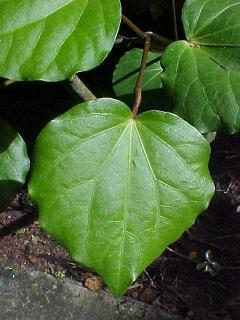
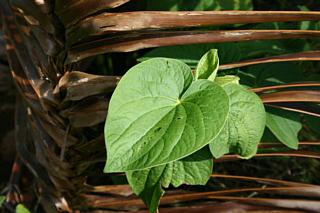
| New Zealand's native plants have in the main three names. A name given by maori, a european name and the scientific binomial classification or the Genus and species name. A common example is Rimu, its Maori name, Red Pine is its european name and its scientific classification is Dacrydium cupressinum. Note how the scientific names are italicised and often underlined. Both Europeans and Maori gave names to plants based on similarites with the plants found in their homelands. In Elsdon Best's Forest Lore of the Maori there are over seventy names which in one form or another are found in use throughout the Pacific. Karaka, kowhai,Tutu, Kowahi, konini, Pukatea,are used to describe similar looking but different species found in Polynesia. Pukatea is a buttressed tree in Rarotonga, Kiekie is a climbing plant, Ngaio and rata are trees, Ponga and wheki are tree ferns. Nikau is the name for the Coconut palm in Mangareva, Tahitian Islands, while Manuka is a tree name at Nukuoroto the west of Fiji. Konini is a name used to identify the native tree Fuchsia and also a name in the Marquesas. The New Zealand Black Pine or Miro is also known as Toromiro, and this tree name occurs at Easter island, Tahiti and Rarotonga. The name Tawa is similar to Tava in Futuna, Tonga, Samoa and Niue, Dawa in Fiji. The intoxicating drink Kava used throughout the Pacific is made from the Kava plant so similar but different to our endemic and non intoxicating Kawakawa.
Old time Maori had a remarkable knowledge of the flora, their uses, stories, images and metaphors passed from generations in an oral tradition. The missionary Rev.William Yate commented " It will scarcely be credited ......that the New Zealanders have a distinct name for every tree and plant in their land...... I was personally astonished, though I ought not to have been so, when a celebrated Austrian Botanist, Baron Heugal, paid us a visit (in 1834) and made a large collection of plants. We had a native tell us their names: he gave names to all without exception, and that with little hesitation. Some of these plants were so small that it might have been supposed that they would have escaped the notice of an individual. But it was not so; not one could be introduced, however minute or wherever the hidden situation in which it had thriven, but a name was found for it: and lest it should be thought that this man was coining the names, anothe Native was called in the following evening, just as the plants were being placed in fresh paper; with one single exception, out of three hundred specimens, he gave the same to each as had been given the night before" European settlers and colonialists searched for names for these unknown new plants and naturally adopted many maori names. Other names were coined to describe some obvious characteristic , similar to a familiar plant from home, such as Mountain Daisy, Pink Broom, Wineberry, NZ Hydrangea, Marble Leaf, Maori jasmine, Maori Privet and many others. So it had been also when maori arrived, that obvous characteristics and similar form were also used to name plants. The Europeans marble leaf was to the Maori Putaputaweta (full of weta holes) as it is, and amongst many others Kaikomako was named as "The food of the bird Komako (bell bird)". The scientific naming of all plants and animals is based upon the binomial (two names) system devised by Carl Linnaeus who was born in Sweden in 1707.In 1735 he moved to The Netherlands where he published the first edition of his classification of living things, the Systema Naturae. During these years, he met or corresponded with Europe's great botanists, and continued to develop his classification scheme. up till then the european botanical community named plants mainly on their uses, similarities to human form or their vegetaive parts. Linnaeus recognised that it was their sexual parts that held the most merit in placing plants into similar groups or families. He was instrumental in arranging to have his students sent out on trade and exploration voyages to all parts of the world: Perhaps his most famous student, Daniel Solander, was the naturalist on Captain James Cook's first round-the-world voyage, and brought back the first plant collections from Australia, New Zealand and the South Pacific to Europe. Linnaeus loved nature deeply, and always retained a sense of wonder at the world of living things. His religious beliefs led him to natural theology, since God has created the world, it is possible to understand God's wisdom by studying His creation. As he wrote in the preface to a late edition of Systema Naturae: Creationis telluris est gloria Dei ex opere Naturae per Hominem solum -- The Earth's creation is the glory of God, as seen from the works of Nature by Man alone. The study of nature would reveal the Divine Order of God's creation, and it was the naturalist's task to construct a "natural classification" that would reveal this Order in the universe. Linnaeus's plant taxonomy was based on the number and arrangement of the reproductive organs; a plant's class was determined by its stamens (male organs), and its order by its pistils (female organs). This resulted in many groupings that seemed unnatural. Linnaeus freely admitted that this produced an "artificial classification," not a natural one, which would take into account all the similarities and differences between organisms. But like many naturalists of the time Linnaeus attached great significance to plant sexual reproduction, which had only recently been rediscovered. Linnaeus drew some rather astonishing parallels between plant sexuality and human love: he wrote in 1729 how The flowers' leaves. . . serve as bridal beds which the Creator has so gloriously arranged, adorned with such noble bed curtains, and perfumed with so many soft scents that the bridegroom with his bride might there celebrate their nuptials with so much the greater solemnity. . . What has survived of the Linnean system is its method of hierarchical classification and custom of binomial nomenclature. For example: Cordyline australis, Ti Kouka, Cabbage tree can be fully classified as follows Kingdom: Plant Division: Magnoliaphyta Class:Liliopsida Order:Asparagles Family: laxmanniaceae Genus:Cordyline Species:australis The strength of this system rests with the lower classification grouping being part of the higher cluster. So, Cordyline is part of the laxmanniaceae family (all families end with aceae) which is part of the Order Asparagales which belongs to the Class Liliopsida of the Magnoliaphyta division inside the plant kingdom. By knowing the scientific binomial genera and species name, one can find where the plant rests in realtionship to its order, class and divion. Similarities and differences can quickly be ascertained. This sytem avoids confusion so often prevalent around common names as while there may be several plants with the same common name, there is only one species named Cordyline australis although 3 species in New Zealand may well be given the name Cabbage tree. however even with this more objective and observation based system ther are still problems presented. Sometimes the botanists will review the classification of a plant group and will change wher the plant rests inside the group. the plant name may change. Then a synonym may be added eg. Mingimingi has at times been Cyathodes juniperina and also Leucopogon juniperina so its name may be presented as Cyathodes juniperina syn Leucopogon juniperina References School Journal part 4 Autumn 1954 The Maori as a plant hunter A.W. Anderson
|
Articles